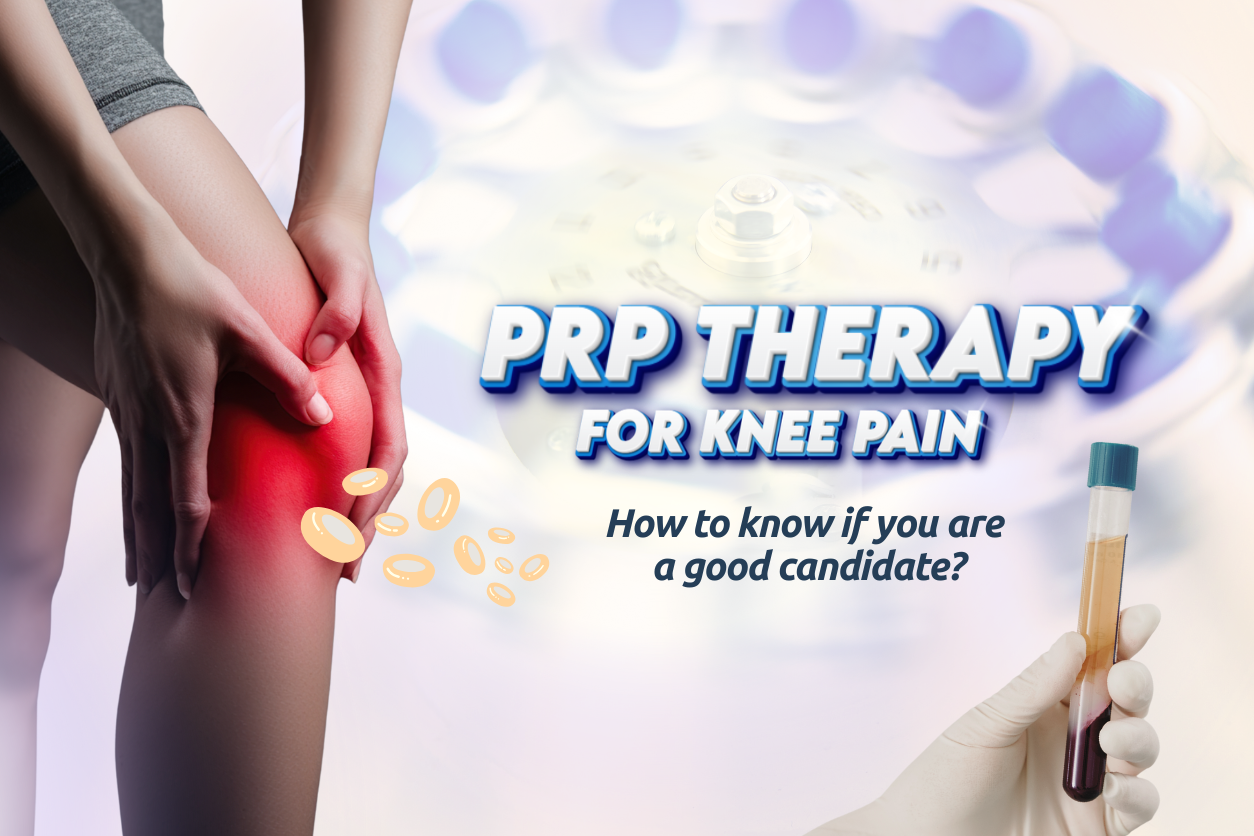
PRP Therapy for Knee Pain – How to know if you are a good candidate

PRP Therapy for Knee Pain - How to know if you are a good candidate

Do you notice a dull knee pain once you stand up after sitting for an extended duration? A dull ache! Sometimes, a sharp catch! Your knee feels stiff, sore, and unreliable. Stairs feel harder than they should. Long walks no longer feel relaxing. If this sounds familiar, you are not alone. Knee pain is one of the most common reasons people seek care today.

Many people want relief without surgery. That is where PRP therapy enters as an effective non-surgical option.

Let us walk through it slowly and clearly.

What is PRP therapy for knee pain?

PRP stands for Platelet Rich Plasma. It comes from your own blood.

The technician will collect a small quantity of blood from your arm. That blood is spun in a special machine. This process, named centrifugation, separates the platelets from the remaining blood components. Platelets contain growth factors. These factors help the body recover easily by repairing the affected tissue naturally.

The concentrated platelet-rich plasma is then introduced into the affected knee. The goal is simple. Support natural healing. Reduce pain. Improve movement.

PRP does not mask pain. It works with your body.

Benefits of PRP therapy for knee pain

Many people choose platelet-rich plasma therapy since it’s a natural and non-surgical treatment method.

Some of the benefits include:

Platelet-rich plasma (PRP) therapy for knee pain is usually used for early arthritis, tendon injuries, and cartilage wear & tear. Results vary. But many patients notice gradual improvement over time.

How to know if you are a good candidate for PRP therapy

PRP is not the right option for everyone. But it could be a good option to be considered if the following factors are applicable to you.

Some of the benefits include:

If knee pain has lasted for months, PRP may help. This includes pain from overuse, sports injuries, or early joint wear. It also helps people in recovering from mild to moderate arthritis.

You want to avoid surgery

Many patients consider platelet-rich plasma (PRP) therapy as an important step to be attempted before surgery. Hence, if you are not ready for the surgery, you can consider PRP treatment for sure. It does not burn bridges. Surgery remains an option later if needed.

You are in good general health

PRP therapy works best if your body has the natural healing capacity. People with good overall health often respond better. However, people with blood disorders or active infections are often recommended to rule it out.

You are not responding well to other treatments

If rest, physiotherapy, pain tablets, or injections have not helped much, PRP may be considered. It offers a different approach.

You are willing to follow post-treatment advice

PRP is not the only quick fix. In addition to this PRP treatment, you should take proper rest, guided movement, and follow-up care. Patience matters.

The PRP therapy process at Medica Stem Cells clinic

Knowing what to expect often eases worry.

Consultation and assessment

Your visit starts with a detailed discussion. Your doctor reviews your pain, movement, scans, and past treatments. After reviewing, the doctor may recommend PRP therapy before surgery to check if it makes sense for your knee.

Blood draw and PRP preparation

The technician will collect the required amount of blood from your arm. It is placed into a centrifuge. This spins the blood to separate the platelets. The process takes about 15 minutes.

PRP injection

The PRP is injected into the affected knee under sterile conditions. ImAaging guidance may be used for accuracy. The injection itself is quick.

Recovery and follow-up

You rest the knee for a short period. Most people go home the same day. Follow-up visits help track progress and guide activity.

Most people describe PRP therapy as uncomfortable rather than mentioning it as painful. You may experience a slight pressure or a short, sting-like sensation during the PRP injection. Even soreness can follow for a few days. This is expected. You can get rid of this discomfort by taking appropriate rest.

How many PRP injections will I need?

This depends on your condition. Some people need one injection. Others may need two or three, spaced weeks apart. Your doctor is here to guide you based on your initial response to PRP therapy.

How soon will I see results?

PRP works slowly. This is important to understand. Some people experience early improvement in symptoms within a few weeks. For others, it takes two to three months. Healing continues over time. Results are gradual, not instant.

Are there any side effects?

Because PRP uses your own blood, serious side effects are rare.
Possible short-term effects include:

Infection is very rare when done properly. Your clinic will explain all risks clearly.

Is PRP therapy right for you?

PRP therapy is not a magical fix. It is also not a surgery. It sits in between.

If you have ongoing knee pain, want to stay active, and prefer a regenerative treatment in Ireland, you can surely think about considering PRP therapy. Many patients, who are already under PRP treatment in Ireland clinics, consider platelet-rich plasma treatment as an effective method.

Are you planning to undergo PRP therapy for knee pain in Ireland? Or, are you searching for the availability of PRP treatment in Belfast? Or, do you need more information about the regenerative treatment services in Ireland? It’s time to explore regenerative medicine clinics like Medica Stem Cells Clinic.

A quality discussion with a regenerative medicine specialist helps you decide. Ask questions. Understand expectations. Choose what suits your body and lifestyle. The right clinic and doctors are more important than the treatment itself.

Share:

Send Us A Message
RECENT ARTICLES

Previous

Next