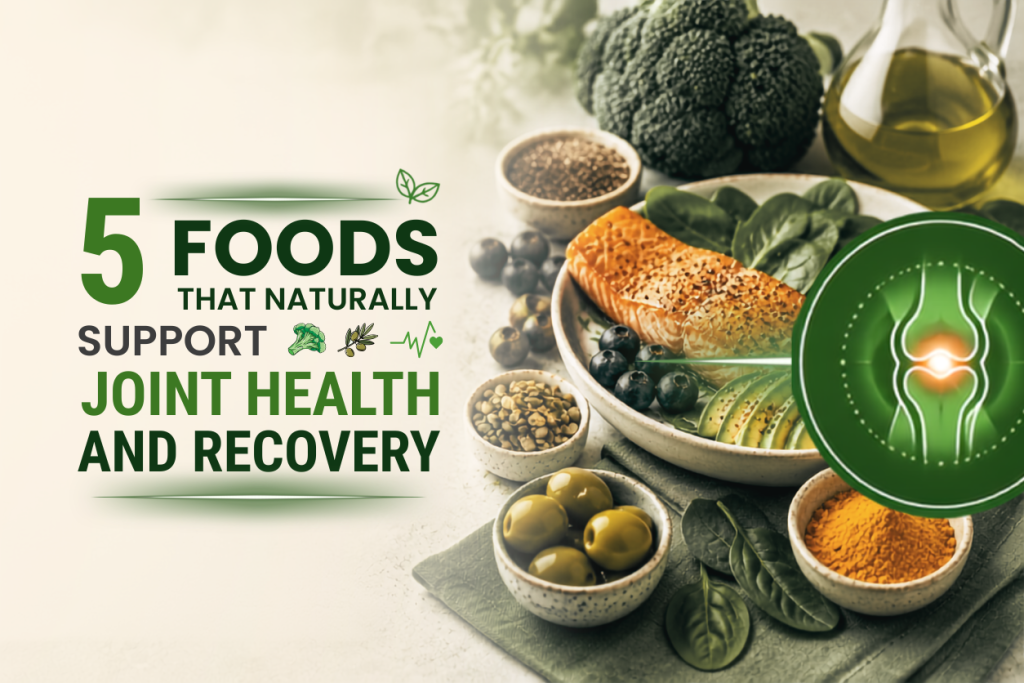
5 Foods That Naturally Support Joint Health and Recovery

5 Foods That Naturally Support Joint Health and Recovery

Joint pain does not wait for a convenient time. It can make stairs feel steeper, gardening feel impossible, and a good night’s sleep harder to come by. While no single food reverses arthritis or replaces medical treatment, what you eat measurably affects how much inflammation your joints deal with day to day.

This article looks at five foods with genuine, cited evidence behind their role in joint health and recovery. Each works through a distinct biological pathway rather than repeating the same mechanism under a different name. You will also find practical ways to add them to your week, and where diet reaches its limit for people in Ireland, Belfast, and the wider UK exploring regenerative medicine.

FEATURED SNIPPET ANSWER

Fatty fish, turmeric, dark berries, leafy greens, and extra virgin olive oil are five of the most evidence-backed foods for joint health. Each contains compounds, including omega-3 fatty acids, curcumin, and anthocyanins, that help calm inflammation and support recovery when eaten regularly as part of a balanced diet.

What are anti-inflammatory foods?

Anti-inflammatory foods contain natural compounds, such as omega-3 fatty acids, polyphenols, and antioxidants, that help reduce the chemical signals your body produces during chronic inflammation. They do not eliminate inflammation, since some inflammation is a normal healing response, but regular intake may help lower the low-grade, ongoing inflammation linked to joint pain and stiffness.

1. Fatty Fish for Omega-3 Fatty Acids

Salmon, mackerel, sardines, and herring are rich in the omega-3 fatty acids EPA and DHA. These fats are converted into signalling molecules called resolvins, which actively help switch off the inflammatory response rather than simply blocking it.

A meta-analysis of omega-3 supplementation for inflammatory joint pain, published in the journal Pain, found that omega-3s meaningfully reduced the need for anti-inflammatory medication in people with conditions such as rheumatoid arthritis (Goldberg and Katz, 2007). The effect builds over weeks rather than appearing overnight, so consistency matters more than any single meal.

Aim for two portions of oily fish a week. If you rarely eat fish, ground flaxseed and walnuts offer plant-based omega-3s, though in a less readily used form.

2. Turmeric and Curcumin

Turmeric owes its anti-inflammatory reputation to curcumin, a compound that interferes with several of the chemical pathways involved in joint inflammation.

In a multicentre trial of 367 patients with knee osteoarthritis, curcumin extract at 1,500 mg per day produced pain and function improvements comparable to ibuprofen at 1,200 mg per day over four weeks, with fewer gastrointestinal side effects in the curcumin group (Kuptniratsaikul et al., 2014, Clinical Interventions in Aging).

Curcumin is poorly absorbed on its own. Pairing turmeric with black pepper, which contains piperine, or with a fat source such as olive oil, improves how much your body actually takes up.

3. Berries and Other Anthocyanin-Rich Fruit

Blueberries, blackberries, and tart cherries owe their deep colour to anthocyanins, plant pigments with antioxidant properties.

In a randomised, placebo-controlled trial in patients with knee osteoarthritis, tart cherry juice lowered levels of C-reactive protein, a blood marker of inflammation. This reduction was associated with improved WOMAC scores for pain and function, although overall symptom relief was not significantly greater than placebo (Schumacher et al., 2013, Osteoarthritis and Cartilage).

The honest takeaway is that berries appear to support the inflammatory side of joint health rather than acting as a standalone treatment. A cup of mixed berries most days, added to porridge or yoghurt, is a realistic way to include them.

4. Leafy Greens for Vitamin K

Kale, spinach, and other dark leafy greens are among the richest dietary sources of vitamin K, a nutrient involved in the proteins that help regulate cartilage and bone mineralisation.

Research published in Arthritis & Rheumatism found that low vitamin K status was associated with a higher prevalence of osteoarthritis in both the hand and the knee (Neogi et al., 2006). The researchers linked this to vitamin K’s role in activating proteins that help keep cartilage and bone tissue properly mineralised.

A daily side salad or a couple of servings of cooked greens most days covers a meaningful amount of vitamin K for most adults.

5. Extra Virgin Olive Oil

Extra virgin olive oil contains oleocanthal, a compound identified in a study published in Nature as having anti-inflammatory activity that inhibits the same COX enzymes targeted by ibuprofen (Beauchamp et al., 2005).

The effect is real but modest. Around 50 grams, roughly three to four tablespoons, of good-quality extra virgin olive oil a day has been estimated to provide about a tenth of an adult ibuprofen dose in oleocanthal activity. That is meaningful as part of an overall diet, but it is not a substitute for treatment when pain is significant.

Use it in place of butter or refined vegetable oils in dressings and cooking where you can.

Practical Dietary Tips for Joint Recovery

Small, sustained changes tend to outperform short bursts of strict eating. A few practical starting points:

When Diet Alone Is Not Enough

Diet can meaningfully support joint health, but it cannot regenerate damaged cartilage or reverse structural joint changes. For patients with more advanced wear, such as those researching knee arthritis and osteoarthritis in detail, regenerative options are worth discussing with a clinician.

Platelet-rich plasma (PRP) therapy uses a concentrated preparation of your own blood platelets, injected into the joint to stimulate the body’s natural repair response. It is often considered for early to moderate osteoarthritis. For more advanced degeneration, deciding between platelet-rich plasma and stem cell therapy usually comes down to how much cartilage remains and what the patient hopes to achieve.

At Medica Stem Cells, our clinical teams in Dublin and Belfast see patients across Ireland, Northern Ireland, and the wider UK. Many have already tried dietary changes and conservative treatment without the relief they were hoping for. Nutrition and regenerative medicine are not competing approaches. They work best together, with diet supporting the tissue environment that any injected treatment is trying to repair.

Frequently Asked Questions:

Diet can help manage inflammation and may modestly reduce pain and stiffness, particularly in early-stage joint conditions. It will not regenerate cartilage or reverse structural damage, so it works best alongside, not instead of, medical treatment when joint damage is more advanced.

Most of the evidence behind foods such as turmeric and omega-3s shows measurable effects after several weeks of consistent intake, not after a single meal. Give dietary changes at least four to six weeks before judging their impact.

Not always. Curcumin supplements, for example, are often formulated for better absorption than turmeric powder used in cooking. Whole foods provide additional fibre and nutrients that isolated supplements do not, so a combination of both is often the most practical approach.

Added sugar, refined carbohydrates such as white bread and pastries, and heavily processed foods are consistently linked to higher inflammatory markers in dietary research. Reducing these, rather than only adding anti-inflammatory foods, is often the more noticeable change.

If joint pain is limiting daily activity, has lasted more than a few months, or has not responded to diet and conservative treatment, it is worth discussing regenerative options with a clinician. A consultation can clarify whether platelet-rich plasma, stem cell therapy, or continued conservative management is the more suitable next step for your case.


Small, consistent dietary changes add up over months, not days. Start with one or two of the foods above, keep at them, and treat nutrition as one part of a broader approach to joint health rather than the whole plan.

If diet and conservative treatment have not resolved your joint pain, find out if you are a candidate for regenerative therapy with our clinical team in Dublin or Belfast. Book a consultation with our clinical team.

This article is for informational purposes only and does not constitute medical advice. Individual results may vary. Please consult a qualified clinician before making any treatment decisions.

Share:

Send Us A Message
RECENT ARTICLES

Previous

Next