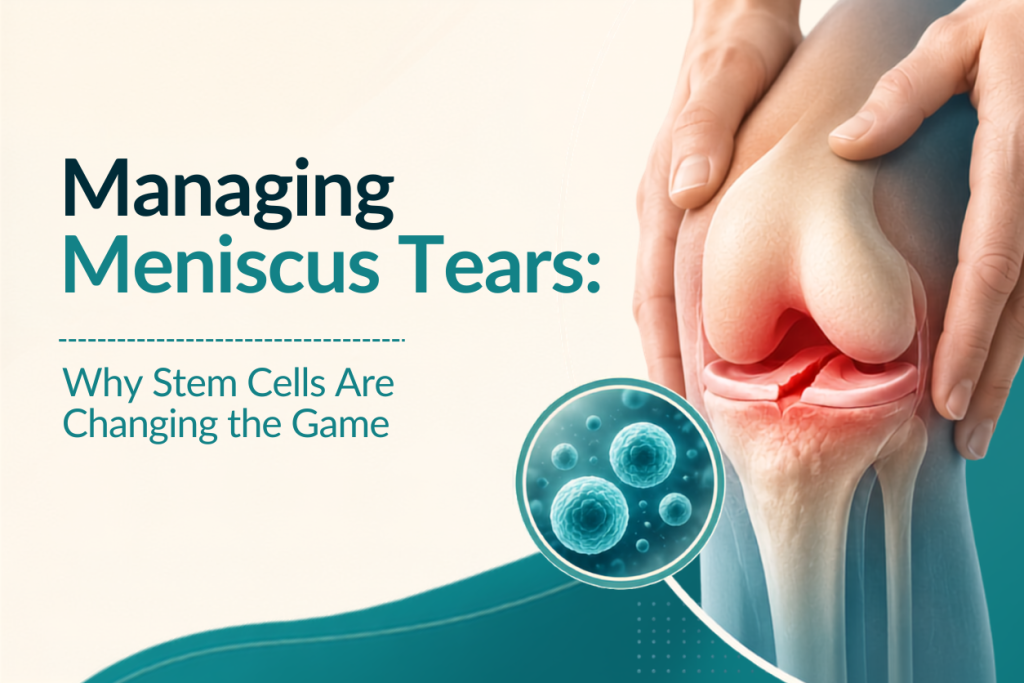
Managing Meniscus Tears: Why Stem Cells Are Changing the Game

Managing Meniscus Tears: Why Stem Cells Are Changing the Game

A meniscus tear can turn simple movements like climbing stairs or twisting to grab a seatbelt into a source of pain. For many adults in Belfast, Ireland and across the UK, this common knee injury raises an urgent question: is surgery really the only path forward? Regenerative medicine is giving patients an evidence-informed alternative worth understanding before making that decision.

What is the best meniscus tear treatment?

Meniscus tear treatment Ireland depends on the tear’s location, size and your activity goals. Options range from rest and physiotherapy to arthroscopic surgery. Stem cell therapy for meniscus tear injuries is an emerging non-surgical option that aims to support the knee’s own repair processes rather than removing or reconstructing damaged tissue.

What Is a Meniscus Tear?

What is a meniscus?

The meniscus is a C-shaped piece of cartilage that sits between the thighbone and shinbone. Each knee has two: one on the inner side (medial) and one on the outer side (lateral). Together, they cushion the joint and help distribute weight evenly during movement.

A tear occurs when this cartilage is damaged, either through a sudden twisting injury or gradual wear as part of the ageing process. The medial meniscus is torn more often than the lateral meniscus, largely because of its more limited mobility within the joint.

Common Symptoms and Causes

Meniscus tears present differently depending on severity, but common signs include:

Two broad causes account for most tears. Traumatic tears happen suddenly, often during sport, when the knee twists while the foot stays planted. Degenerative tears develop over time as cartilage naturally thins and weakens with age, sometimes without any specific triggering incident at all.

Traditional Treatment Options

Conservative care is usually the starting point for most patients. This typically includes rest, ice, compression and elevation (RICE), anti-inflammatory medication, and a structured course of physiotherapy to strengthen the muscles supporting the knee.

When symptoms persist, clinicians may consider arthroscopic partial meniscectomy, a keyhole procedure that trims away damaged tissue, or meniscal repair surgery, which stitches the tear back together where the tissue is suitable for healing.

Surgery can be effective, but it carries the usual risks associated with any operation, along with a recovery period that often involves weeks of restricted weight-bearing and rehabilitation. It also does not suit everyone, particularly older patients or those with degenerative rather than traumatic tears, where research increasingly questions how much added benefit surgery provides over structured exercise therapy alone.

How Stem Cell Therapy May Support Meniscus Healing

What is stem cell therapy for a meniscus tear?

Stem cell therapy involves injecting mesenchymal stem cells, most commonly sourced from the patient’s own bone marrow or fat tissue, directly into the knee joint. These cells are thought to support the body’s natural repair signalling around the site of injury.

The meniscus has notoriously poor blood supply, particularly in its inner two-thirds, which is part of why it heals so slowly on its own. Regenerative treatments aim to work around this limitation by introducing cells and signalling factors directly where they may be of most benefit.

The evidence base, while still developing, is encouraging. A randomised, double-blind, controlled study published in the Journal of Bone and Joint Surgery found that patients who received mesenchymal stem cell injections following partial meniscectomy showed a meaningful increase in meniscal volume on MRI, compared with a small minority in the control group (Vangsness CT et al., 2014, Journal of Bone and Joint Surgery). This remains one of the more frequently cited controlled trials in this area of regenerative orthopaedics.

It’s important to understand this as a supportive, evolving treatment rather than a guaranteed cure. Not every patient will respond the same way, and results vary depending on the tear type, its location, and individual healing capacity.

Who May Be a Suitable Candidate?

Stem cell therapy tends to be considered for patients who:

A thorough clinical assessment, usually including imaging and a review of your medical history, is the only reliable way to determine suitability for any individual case.

Benefits and Limitations

Potential benefits include avoiding the downtime associated with surgery, a same-day outpatient procedure under local anaesthetic, and a treatment that works with the joint’s own biology rather than removing tissue.

Limitations are equally important to understand. Stem cell therapy is not suitable for every tear type, particularly large or complex tears in the poorly vascularised zone. Outcomes vary between patients, and it is not currently positioned as a guaranteed replacement for surgery in every case. Ongoing research continues to refine which patients benefit most.

When to Consider a Professional Assessment

If you’re managing ongoing knee pain from a suspected or confirmed meniscus tear, particularly if conservative treatment hasn’t helped after several weeks, a specialist assessment can clarify your realistic options. This is especially relevant if you’re weighing up non-surgical treatment against knee surgery and want an evidence-based view of both paths before deciding.

Frequently Asked Questions:

Smaller tears, particularly in the outer, better-supplied region of the meniscus, sometimes heal with rest, physiotherapy and time. Degenerative tears often respond well to structured exercise therapy. Larger or complex tears may need surgical input.

Mesenchymal stem cells are injected into the knee joint, where they are thought to support the body's own repair signalling around the injured meniscus tissue.

Regenerative treatments for meniscus and knee injuries are available through specialist clinics serving patients across Belfast, Northern Ireland and the wider UK. A consultation will confirm whether it's appropriate for your specific tear.

Recovery timelines vary by individual and tear severity, but many patients return to light activity sooner than after surgical meniscectomy, with a gradual rehabilitation programme guiding return to full activity.

The procedure involves a local anaesthetic and an injection into the joint. Most patients describe manageable discomfort similar to other joint injections, with some soreness in the days following treatment.

Take the Next Step

You don’t need to accept knee pain as permanent, and you don’t have to decide between “surgery” or “nothing” without understanding your full range of options. If you’re exploring knee pain treatment dublin that works with your body rather than against it, book a consultation with our clinical team to find out if you are a candidate for regenerative therapy.

This article is for informational purposes only and does not constitute medical advice. Individual results may vary. Please consult a qualified clinician before making any treatment decisions.

Share:

Send Us A Message
RECENT ARTICLES

Previous

Next